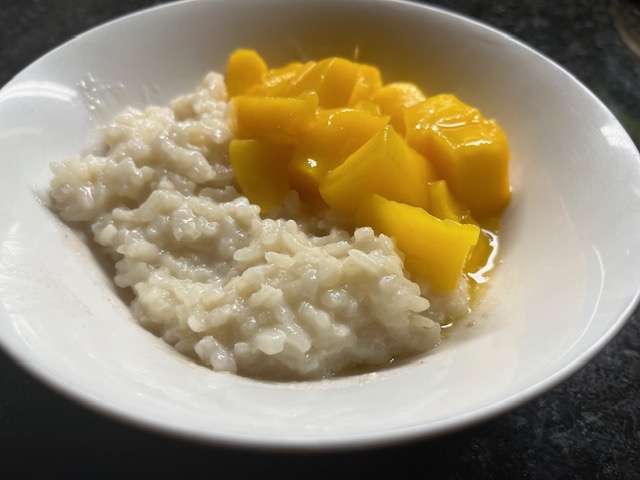
Ripe mangoes, nestled on a bed of sticky rice soaked in coconut milk, creates an irresistible, indulgent dessert. to savor the taste of summer in each delicious bite.
What is Mango Sticky Rice?
Mango sticky rice, also known as khao niaow ma muang, is a traditional Thai dessert that has gained popularity worldwide for its harmonious blend of flavors and delightful textures. This mouthwatering dessert is easy to make, consisting of only three key components: glutinous rice, coconut milk, and fresh mango.
How to Serve mango sticky rice
Mango sticky rice can be enjoyed warm or cold, depending on your preference. The dish is served with the sticky rice scooped onto a plate, mango slices served on top or on the side, and the remaining coconut milk poured on top.
mango sticky rice
Serves: 4 people
Ready in: 60 minutes
Cook time: 30 minutes
Inactive time: 30 minutes
equipment
- A saucepan
ingredients
- 1 cup jasmine rice
- 1 1/2 cups water, divided
- 1 13.5 oz can of coconut milk, divided
- 1/4 teaspoon salt
- 5 tablespoons brown sugar, divided
- 1 ripe mango, sliced
method
Step 1
Rinse the rice and soak it in 1 cup of water for 30 minutes.
Step 2
Add 1/2 cup of water, half the coconut milk, salt, and one tablespoon of brown sugar. Bring to a gentle boil and simmer for 20-25 minutes, or until the liquid has been absorbed and the rice is fully cooked.
Step 3
Allow the rice to sit for 5 minutes. Meanwhile, warm the remaining coconut milk in a saucepan for about 5 minutes. Add the remaining sugar. Pour over the rice and top with mango.
Fun Fact
- The word “mango” likely originated in India, derived from either the Keralan word “mangga” or the Tamil word “mankay.” Later, the Portuguese adopted the term “manga” when they settled in Southern India. The word “mango” was born in the 15th century, when the British began trading with South India.
How to make mango sticky rice:
Involving only four ingredients – sticky rice, coconut milk, brown sugar, and fresh mangoes – mango sticky rice is a fairly simple dish to prepare.
Sticky rice
Glutinous rice, often referred to as sticky rice, is a special variety of rice with a higher starch content compared to regular rice. The grains of glutinous rice are opaque and round, with a sticky, chewy texture when cooked. To prepare the rice for mango sticky rice, it is soaked in water for at least 30 minutes, to allow the grains to plump. Allowing the grains of rice to absorb some moisture before cooking helps to ensure they will evenly cook and end up with their distinct tender, but chewy texture. After soaking, the rice is then cooked until it becomes soft and sticky. This unique texture is what sets sticky rice apart and gives the dessert its signature appeal.
coconut milk
Coconut milk is made by extracting the liquid from grated coconut meat and can easily be found in many grocery stores. It plays a vital role in enhancing the flavor and creaminess of mango sticky rice. Cooking the sticky rice in some coconut milk helps it absorb the coconut’s rich flavor, creating a creamy and fragrant base for the dessert. In the end, a sauce made of brown sugar and coconut milk is prepared to pour over the rice, further enhancing the flavor and providing a luscious sauce to complement the mango. Beyond mango sticky rice, coconut is widely utilized in Thai cuisine, forming the base of many curries.
mango
Fresh mangoes: The crown jewel of this delicious dessert. The mangoes are carefully peeled and sliced, then artfully arranged on top of or served alongside the sticky rice. The vibrant, juicy mangoes provide a refreshing contrast to the creamy rice, creating a perfect balance of flavors. Thai mango varieties such as Nam Dok Mai and Keo Savoy are often preferred for their sweetness, fragrance, and tender flesh.
 Delicious Defined
Leave a comment